

Sending a bike by train, minus the broker.
Motorail books a two-wheeler onto Indian Railways from your phone, with doorstep pickup, packing and the railway paperwork in one price.
- Role
- UX research, UI design, logo
- Project
- Thesis, redesigned in 2026
- Platform
- Mobile app
- Tools
- Figma
The problem
The railway is the cheapest way to move a bike. The process is why people avoid it.
Every day, students and people with transferable jobs send their two-wheelers to a new city by train. Rail is faster than road and costs less, but the booking happens at a parcel counter. Brokers wait outside and quote what they like, the forms change by station, there is no pickup from home, and once the bike leaves there is no way to see where it is.
- 30 min to 3 hours
- spent at the station by the riders we interviewed
- 50+ bikes a day
- leave Ahmedabad Kalupur, by the parcel head's estimate
- 0 of 5 riders
- had ever used a digital service to send their bike
At the station
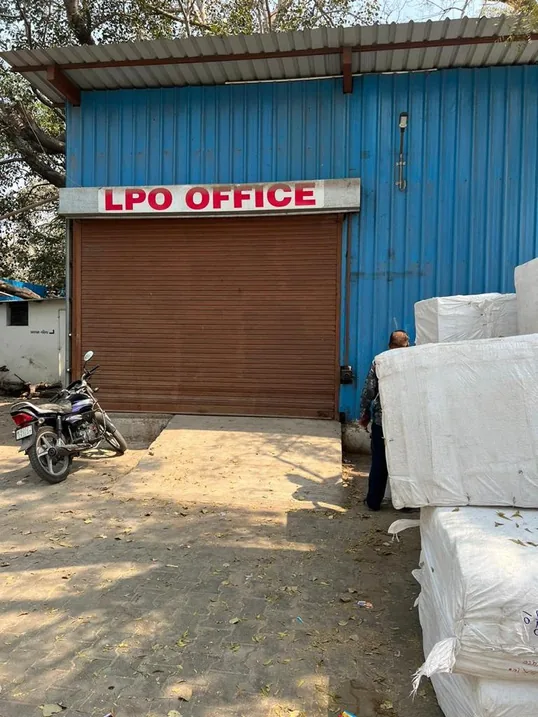
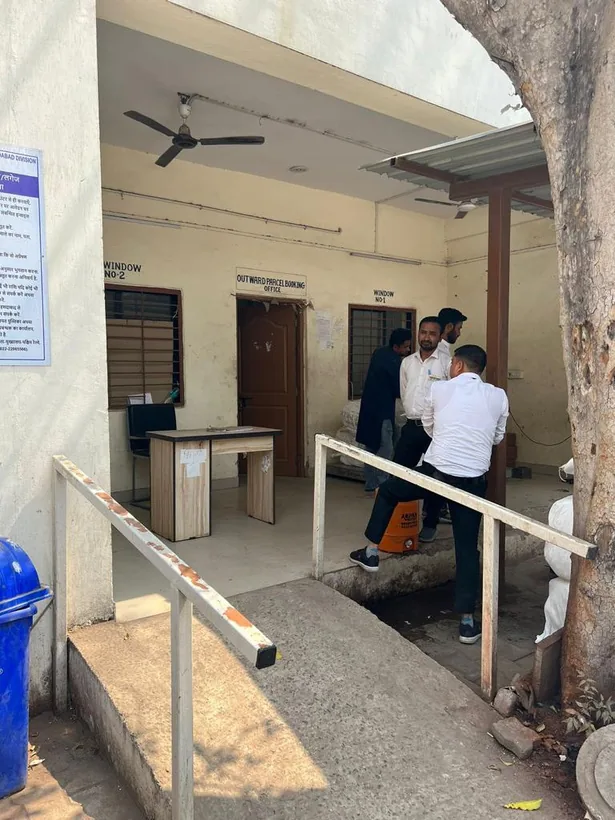
We spent days at the parcel offices in Ahmedabad and Rajkot.
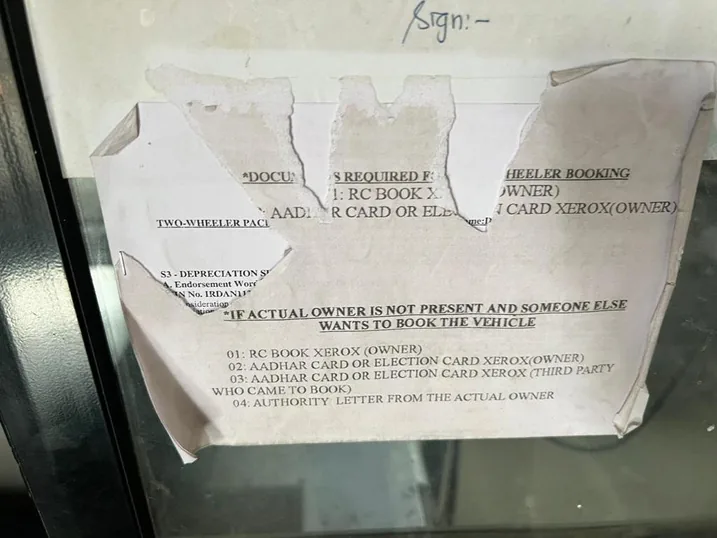
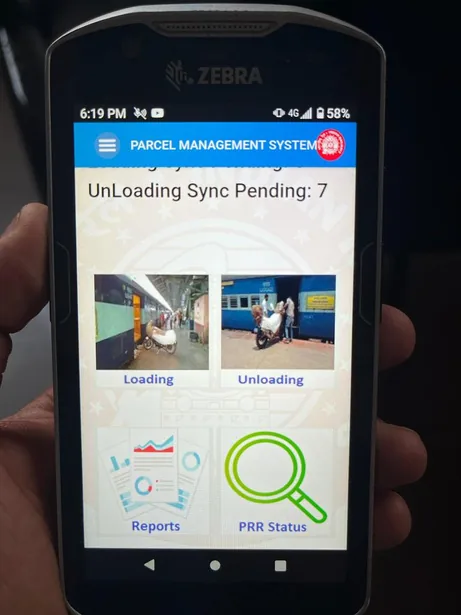
Five riders who had sent bikes by rail, and three railway staff: the head of logistics at Kalupur, the parcel manager and the loading manager at Rajkot Junction. The staff track every parcel on a handheld. The customer gets a torn printout on the glass.
What riders said
Nobody complained about the train. They complained about everything around it.
“Some brokers quoted exorbitantly outside the station.”
Interior designer, sent a bike from Ahmedabad to Satna
“I've taken half day leave just for sending my vehicle back home.”
IT employee, Ahmedabad to Jamnagar
“If you know the process and paperwork, it isn't difficult.”
Model, Ahmedabad to Agra
What we heard, and what the app does about it
- Brokers decide the price
- One fixed quote, paid in the app
- The paperwork is confusing
- Photos of two documents; we fill the railway forms
- Fear of damage on the way
- Three packing levels and transit insurance
- Hours lost at the station
- Pickup from your door, delivery to your door
- No news once it leaves
- Live tracking, station by station
Who else does this
Five services move bikes. None makes the railway simple.
- Indian RailwaysDirect and cheap, but no online booking, no pickup and paper forms at the counter.
- PorterDigital and quick, but road only, with no railway option.
- MoveMyCarA wide network, but it works through agents and takes no liability for damage.
- CarBikeMoversUses the railway, but online tracking is limited and deliveries slip.
- LogisticMartAffordable, but support is thin and tracking updates are patchy.
The gap: a digital, door-to-door booking that still uses the railway's own network and prices.
Making sense of it
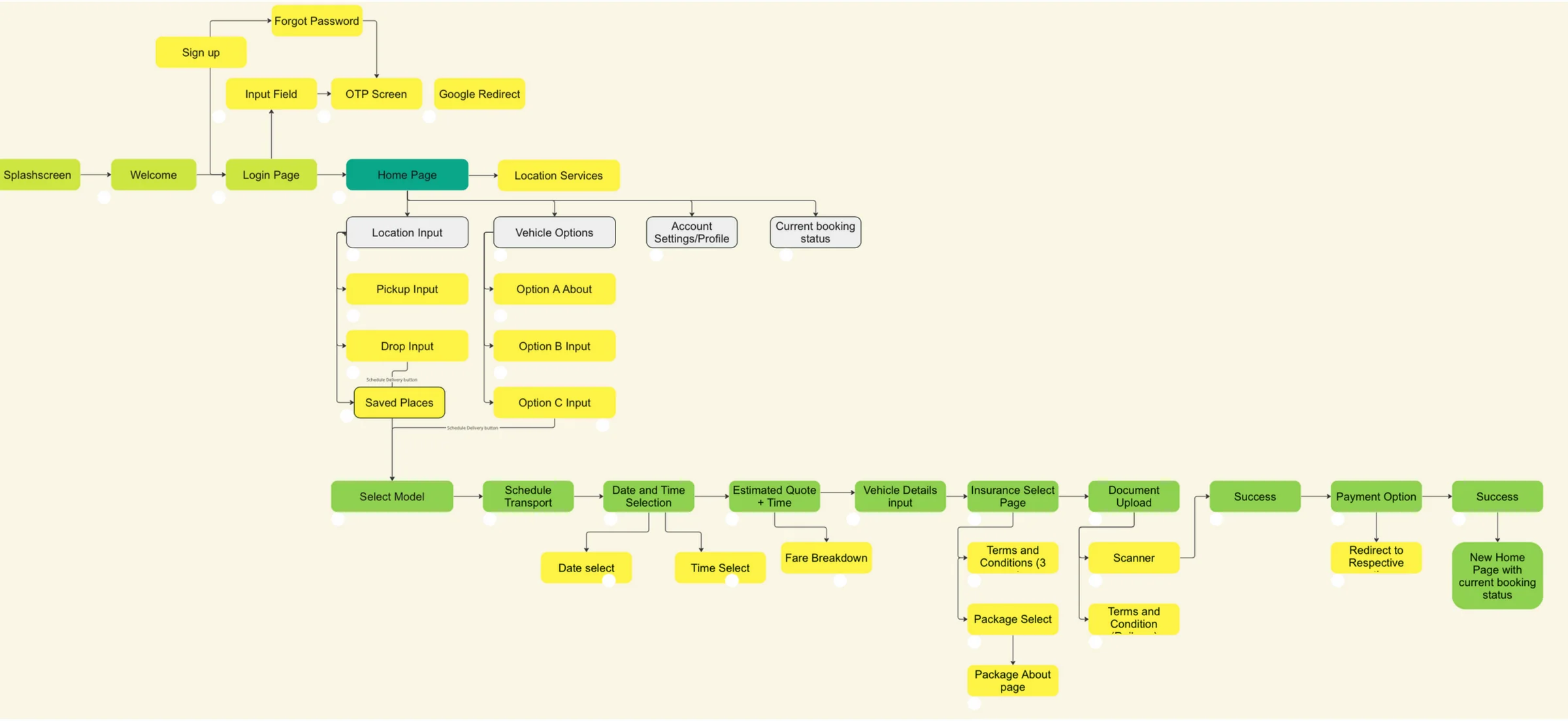
From sticky notes to a flow with one job per screen.
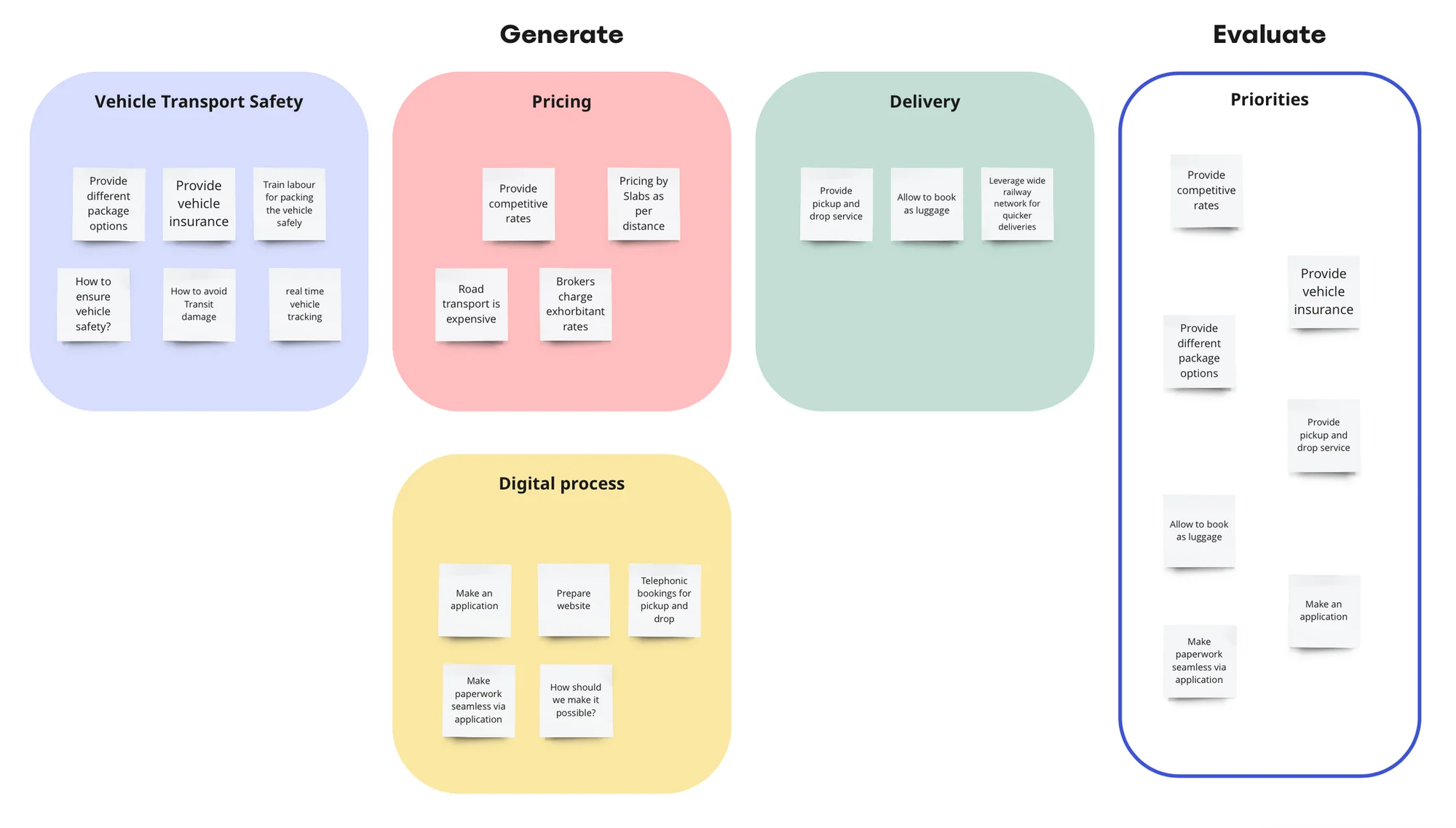
The interview notes fell into four groups: vehicle safety, pricing, delivery and the digital process. The priorities that came out of them shaped the information architecture: pickup and drop, fixed rates, packing choices, insurance, and paperwork done in the app.
The name and mark
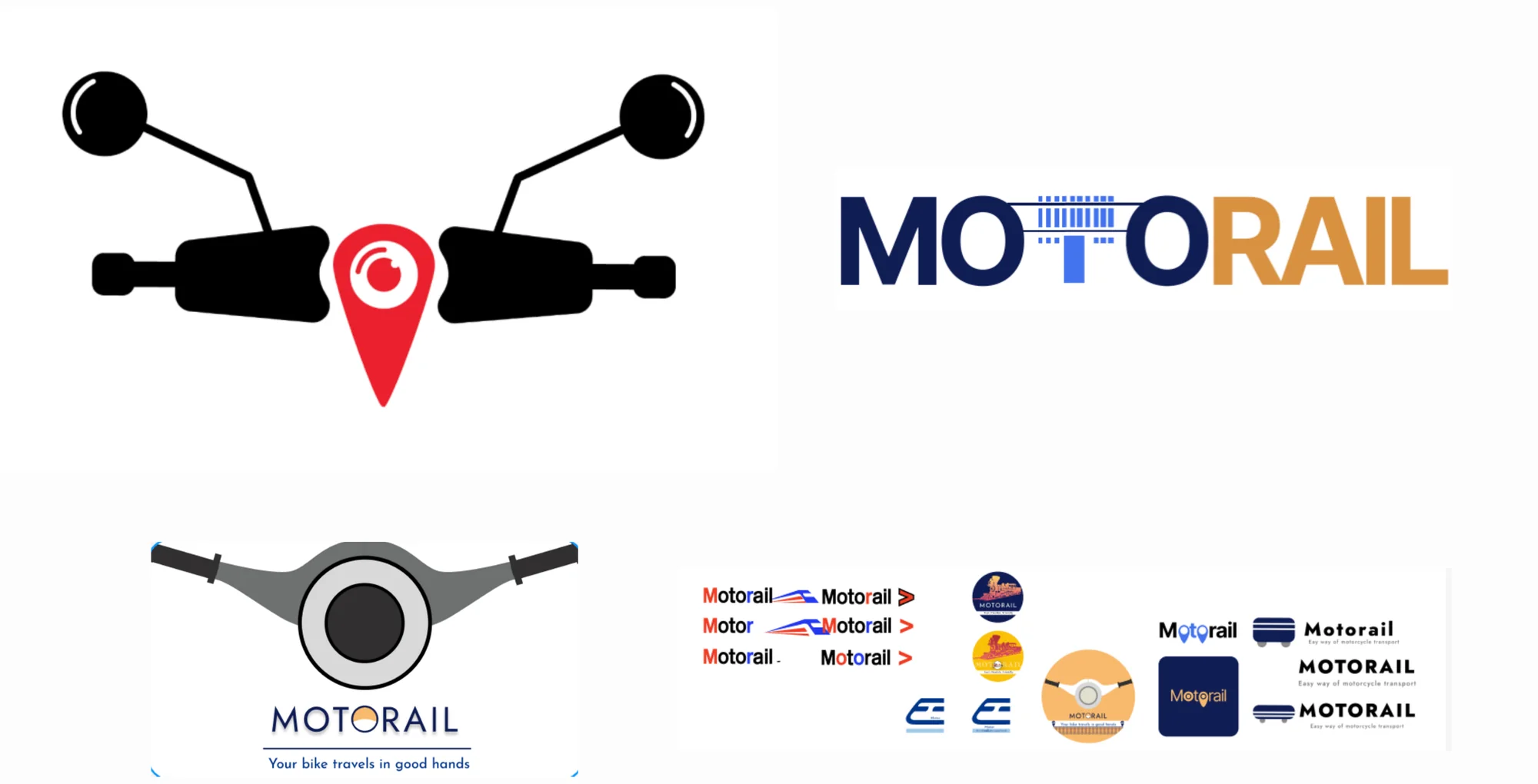
Moto plus rail, with a location pin for the first o.
The early sketches tried handlebars, tracks and trains. The final mark keeps it to type: the pin says “we know where your bike is”, and the saffron rings read as wheels.

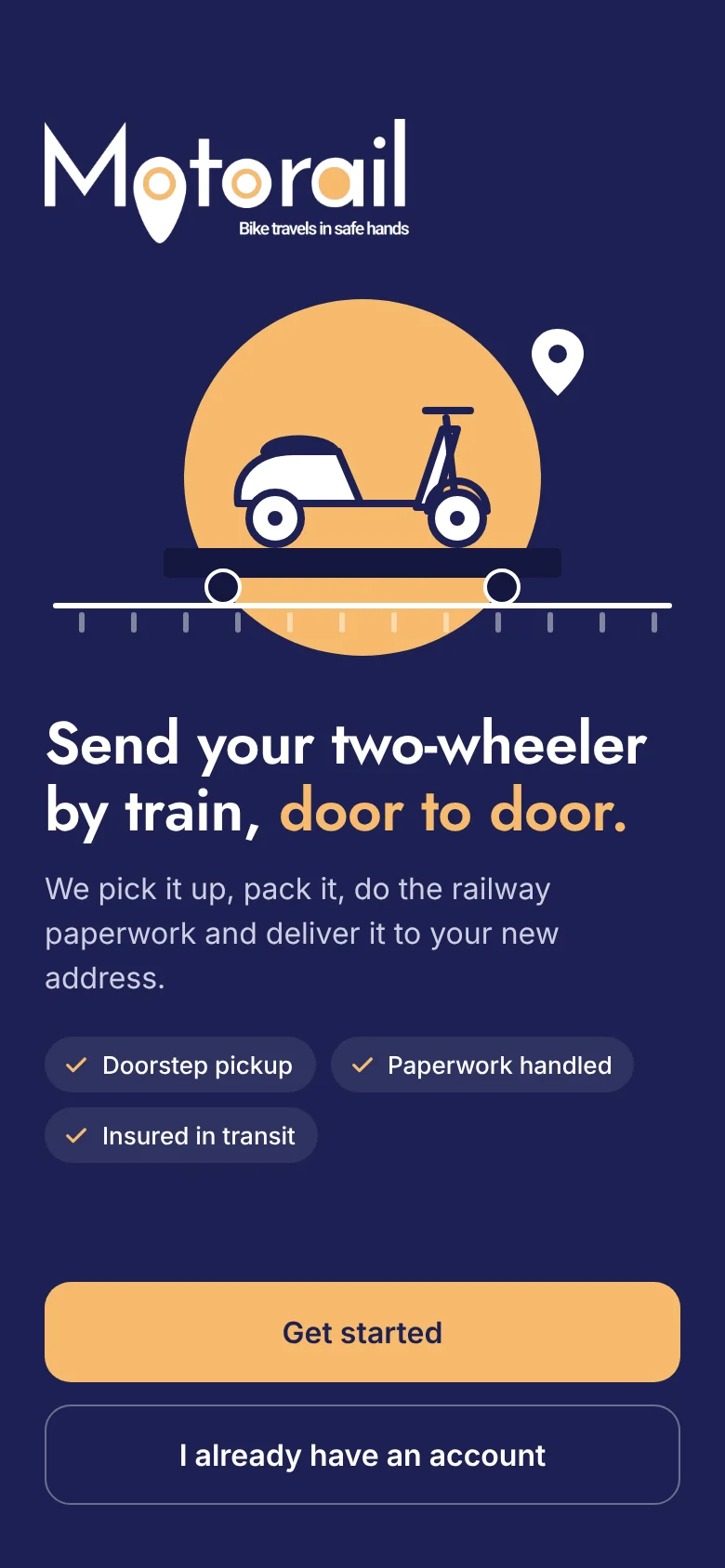
One number, one code, and the whole service in a line.
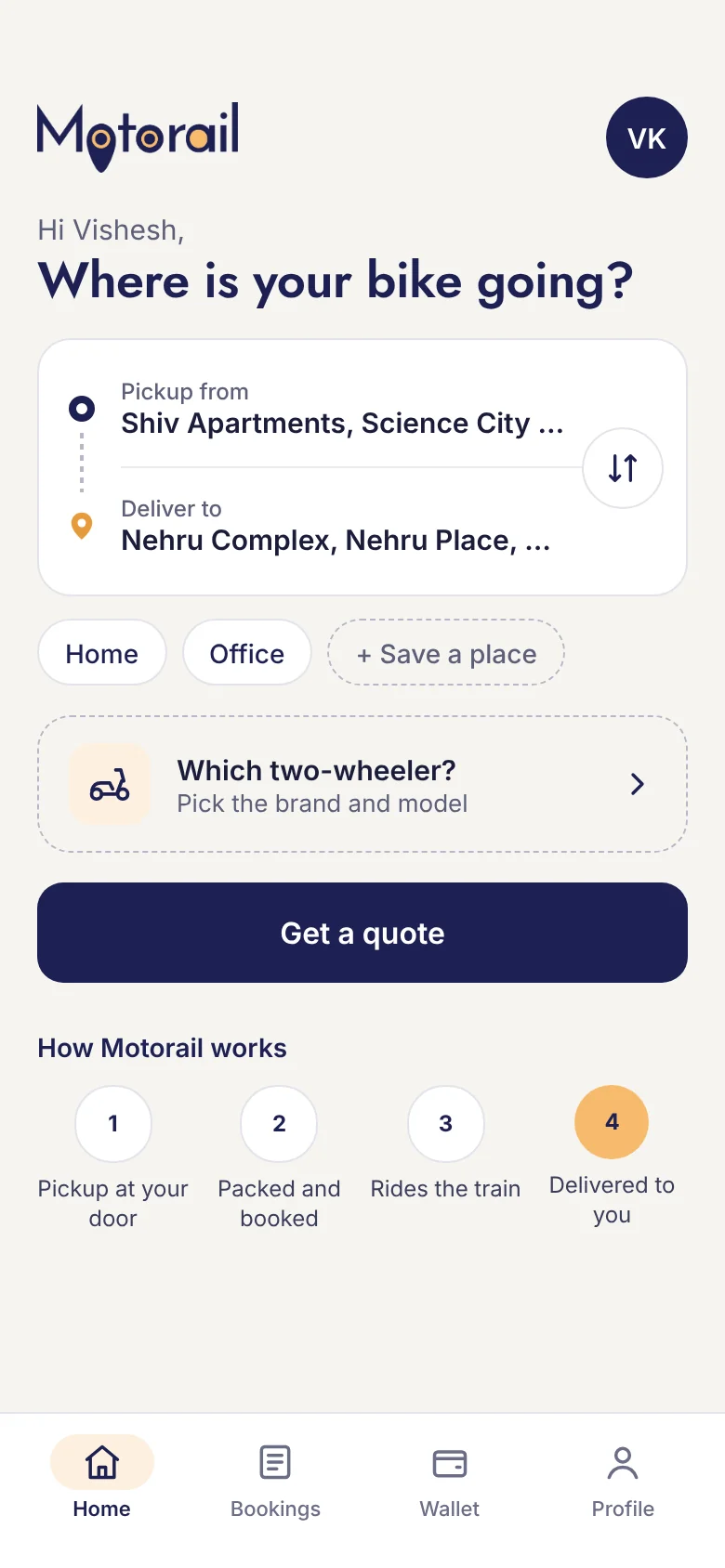
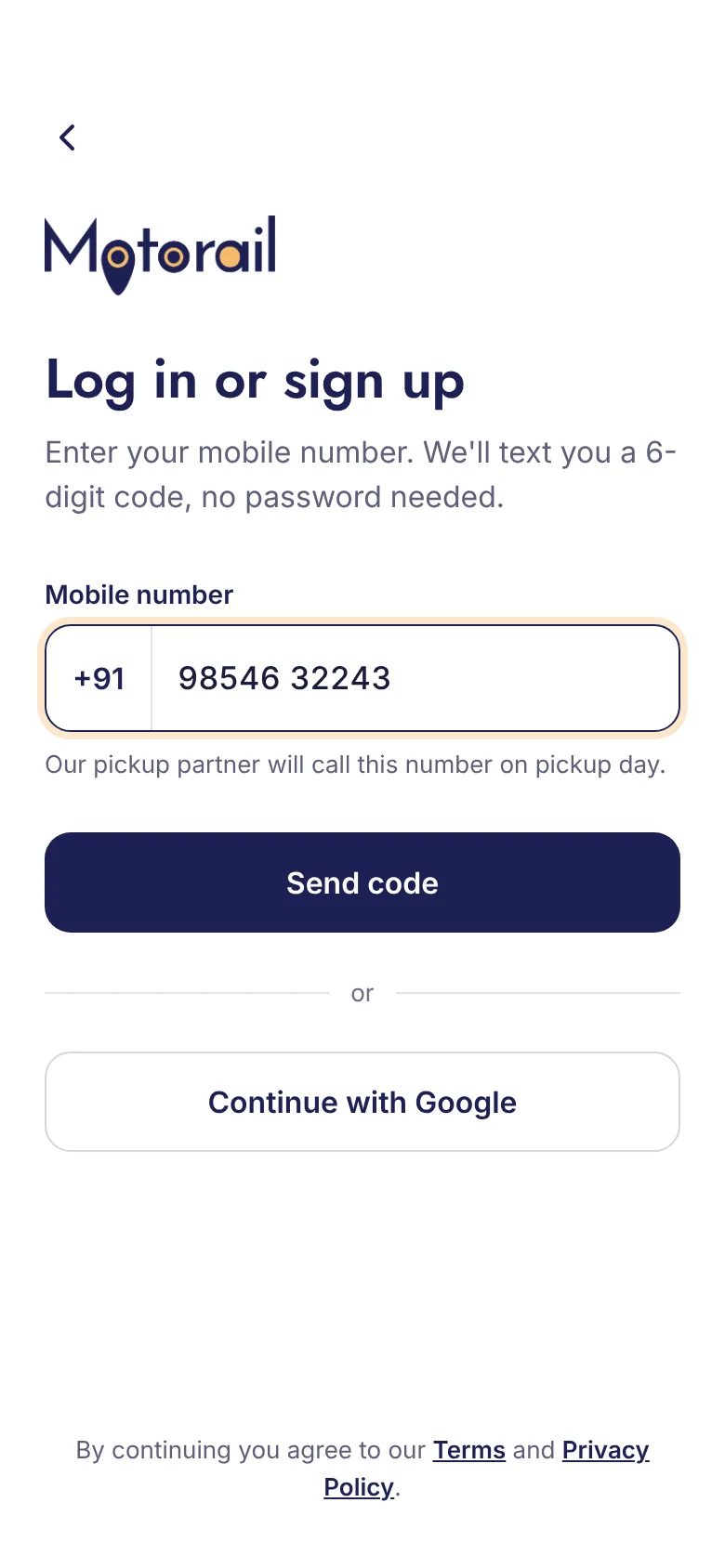
No passwords: a mobile number and an SMS code, the same flow for new and returning riders. The first screen says exactly what Motorail does, and home asks one question: where is your bike going?
Six steps and a quote, coupled like carriages.
Each screen asks one thing. The price appears only after packing is chosen, so the quote is the amount you pay. Scroll the train sideways.
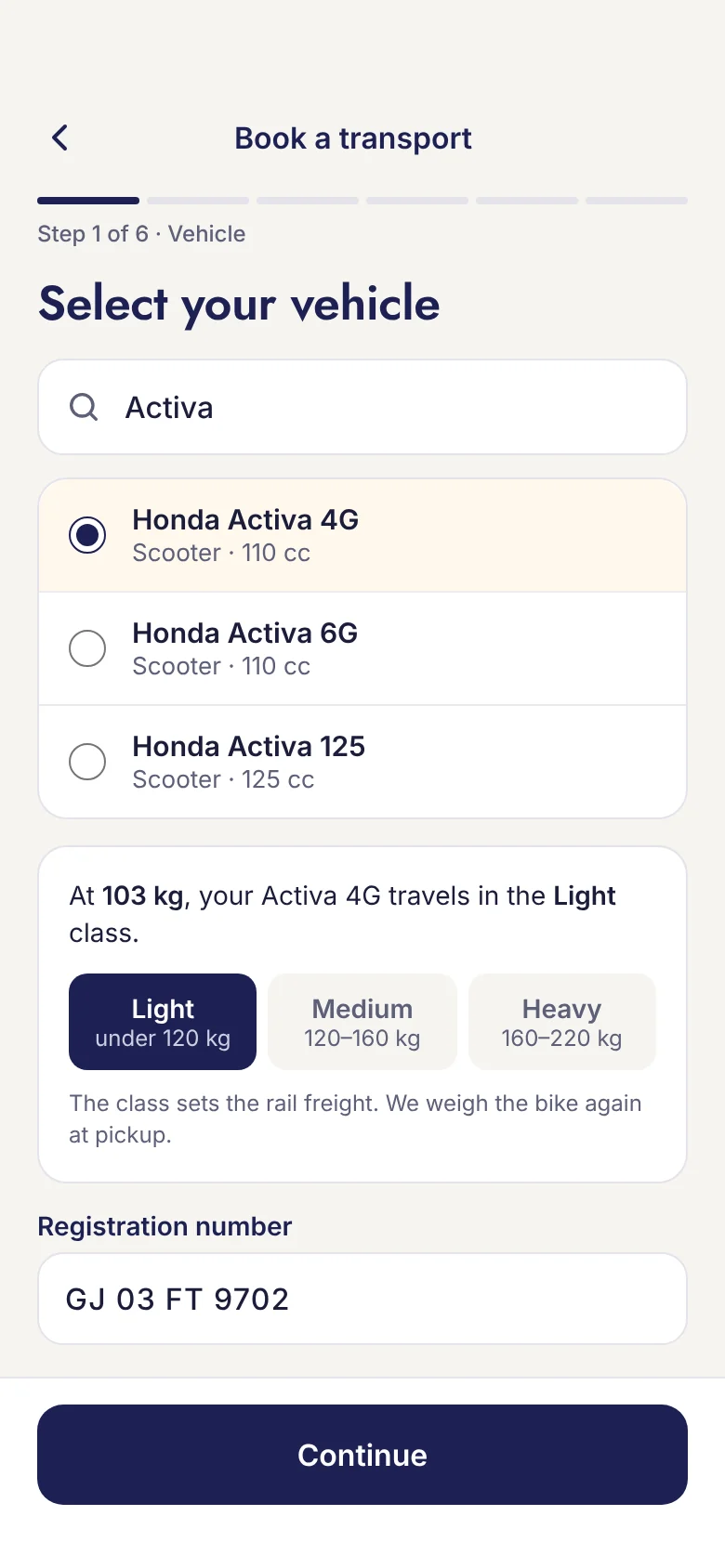
1. Vehicle
Pick the model. Its weight sets the class, so the freight is right from the start.
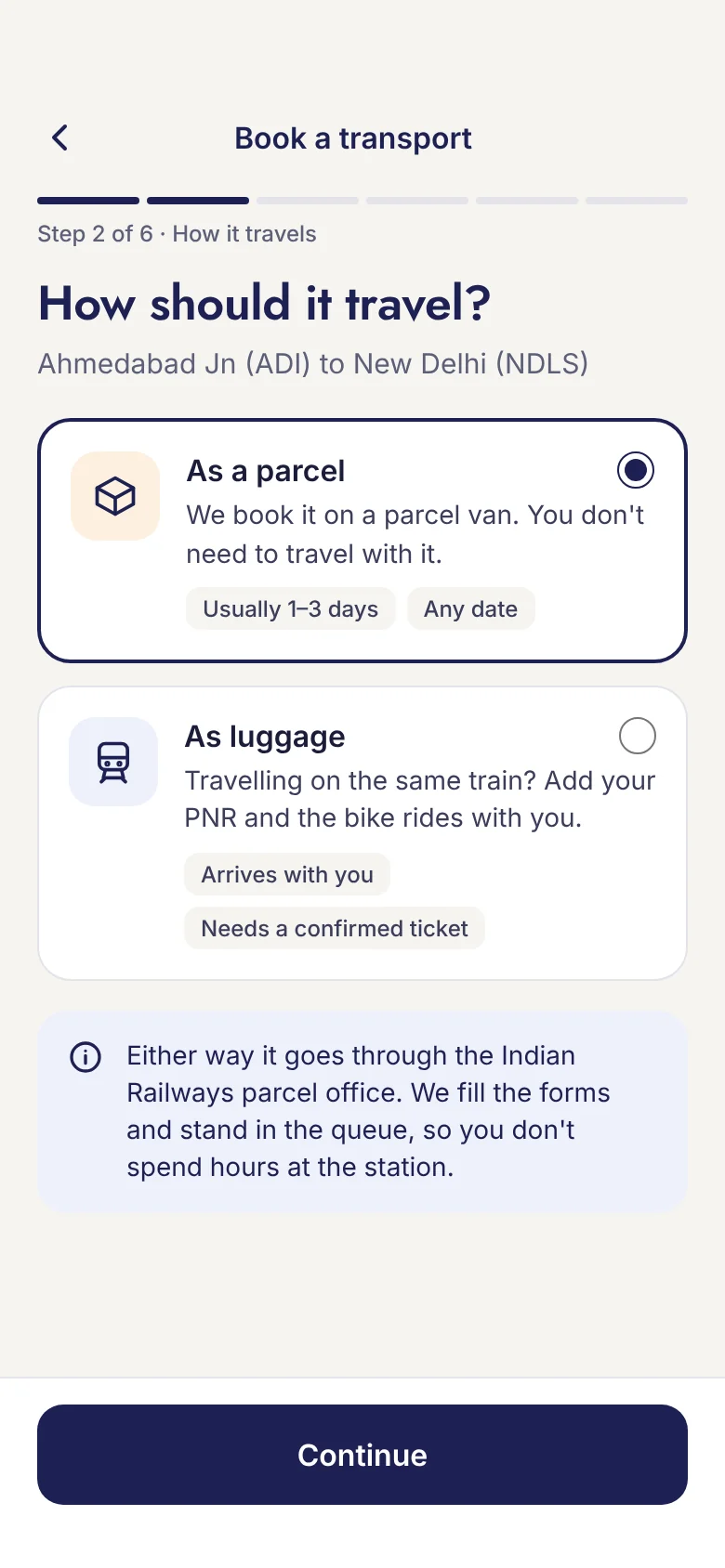
2. How it travels
Parcel, or luggage on your own train with a PNR.
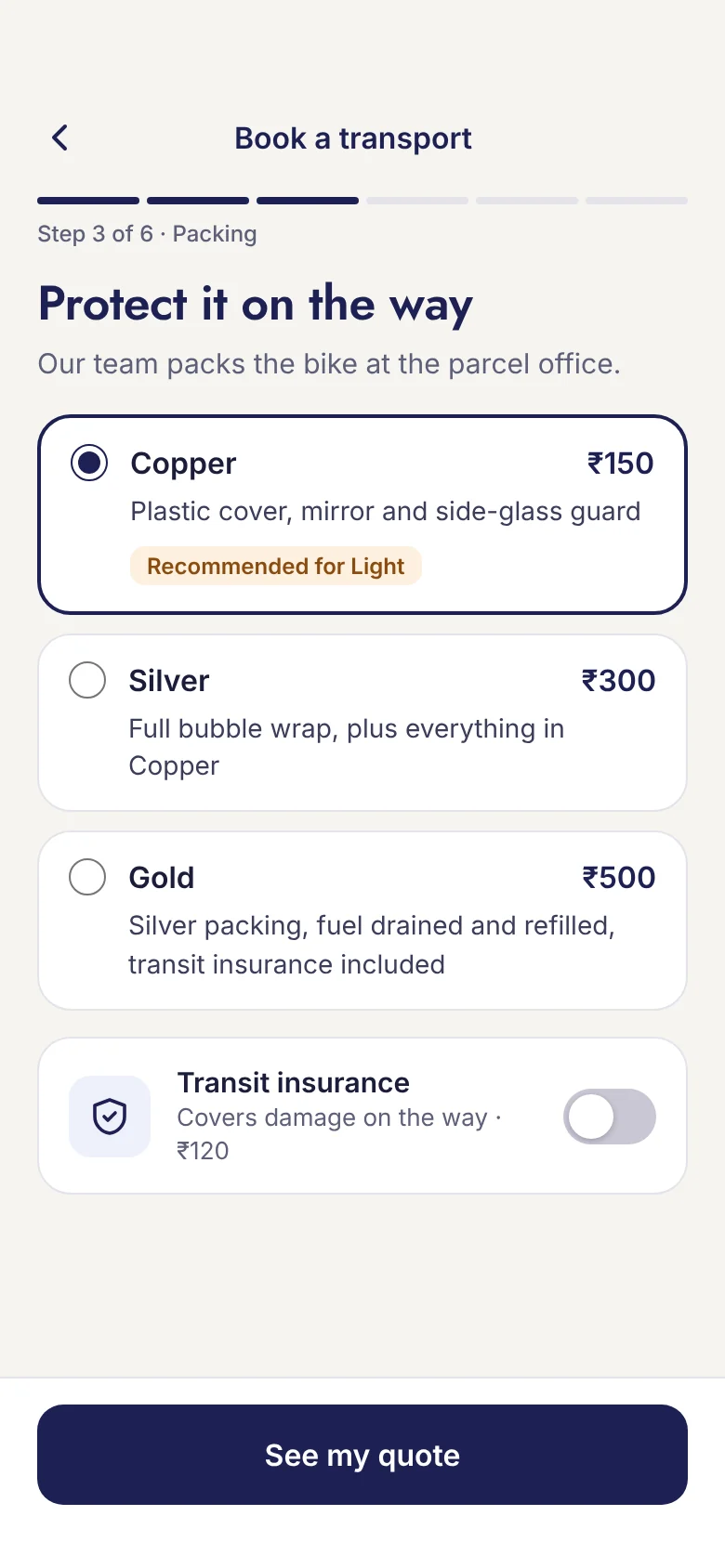
3. Packing
Three levels, plus optional transit insurance.
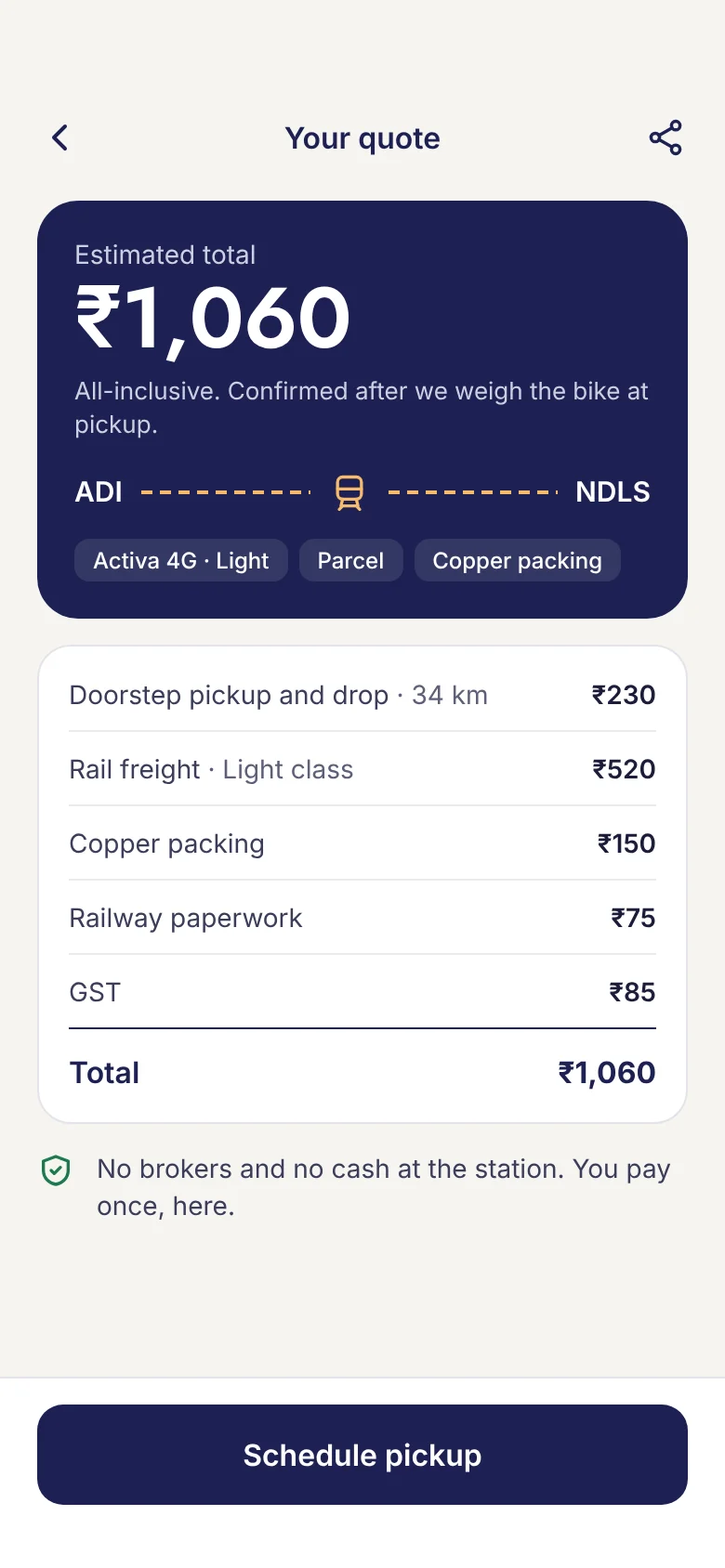
Your quote
Every rupee itemised. The total matches what you pay.
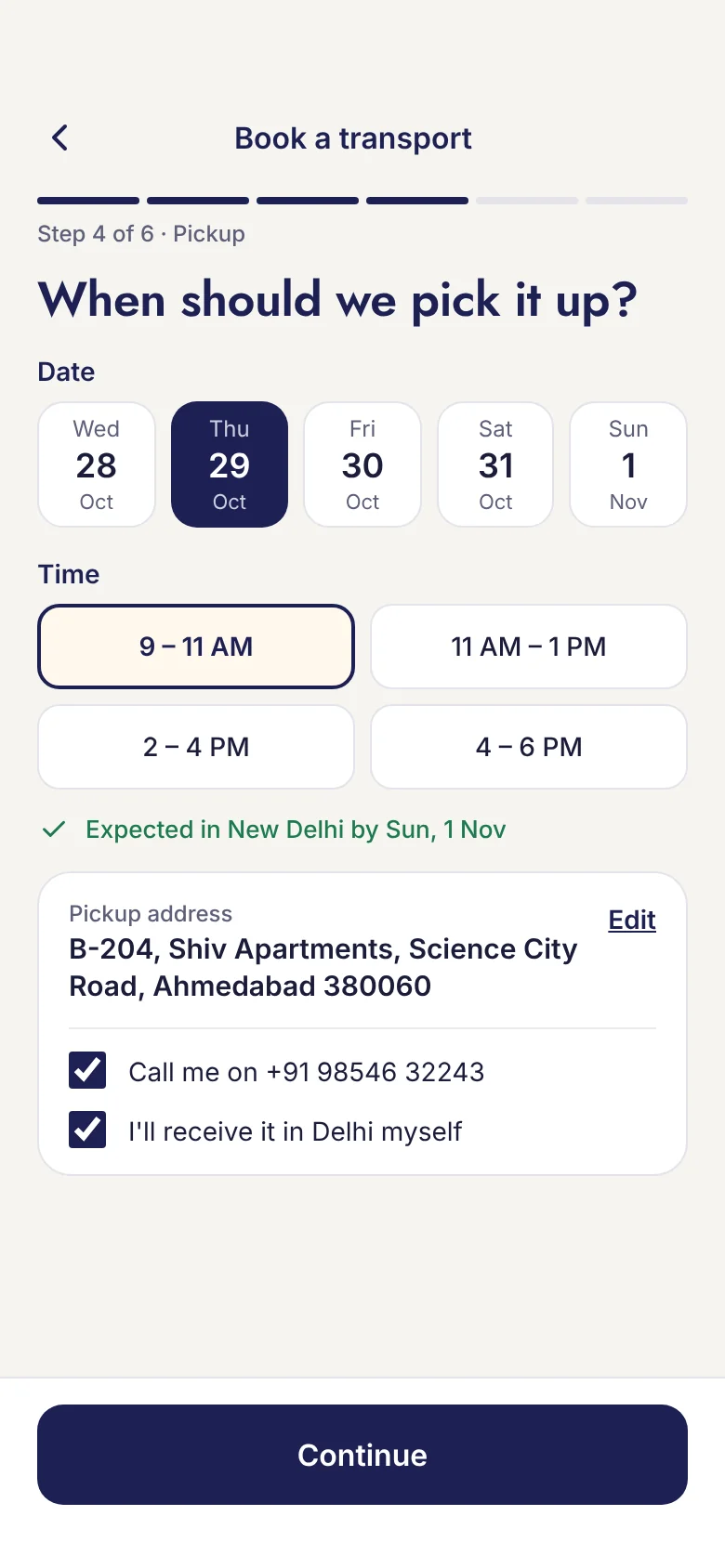
4. Pickup
A date, a two-hour slot, and the delivery date before you commit.
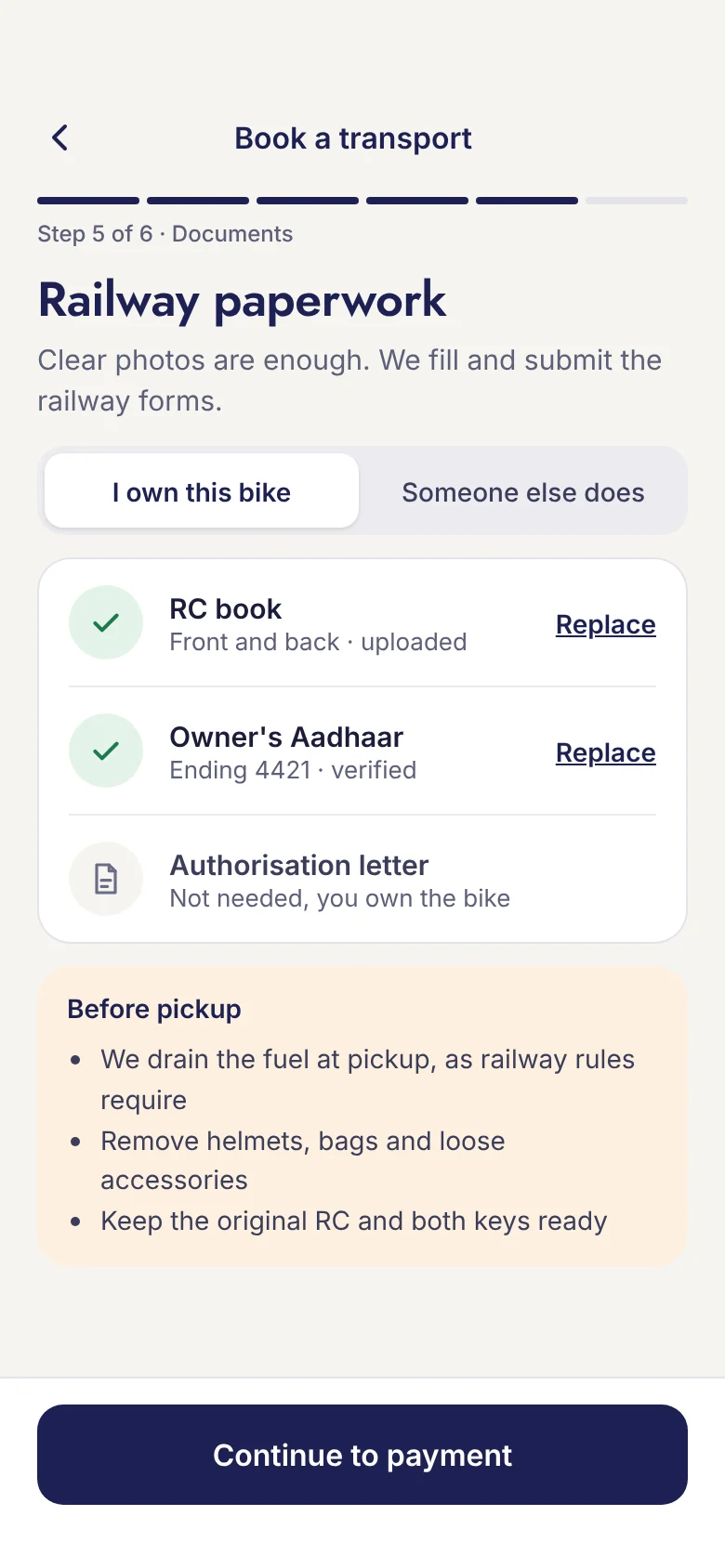
5. Documents
RC book and Aadhaar as photos. We do the forms.
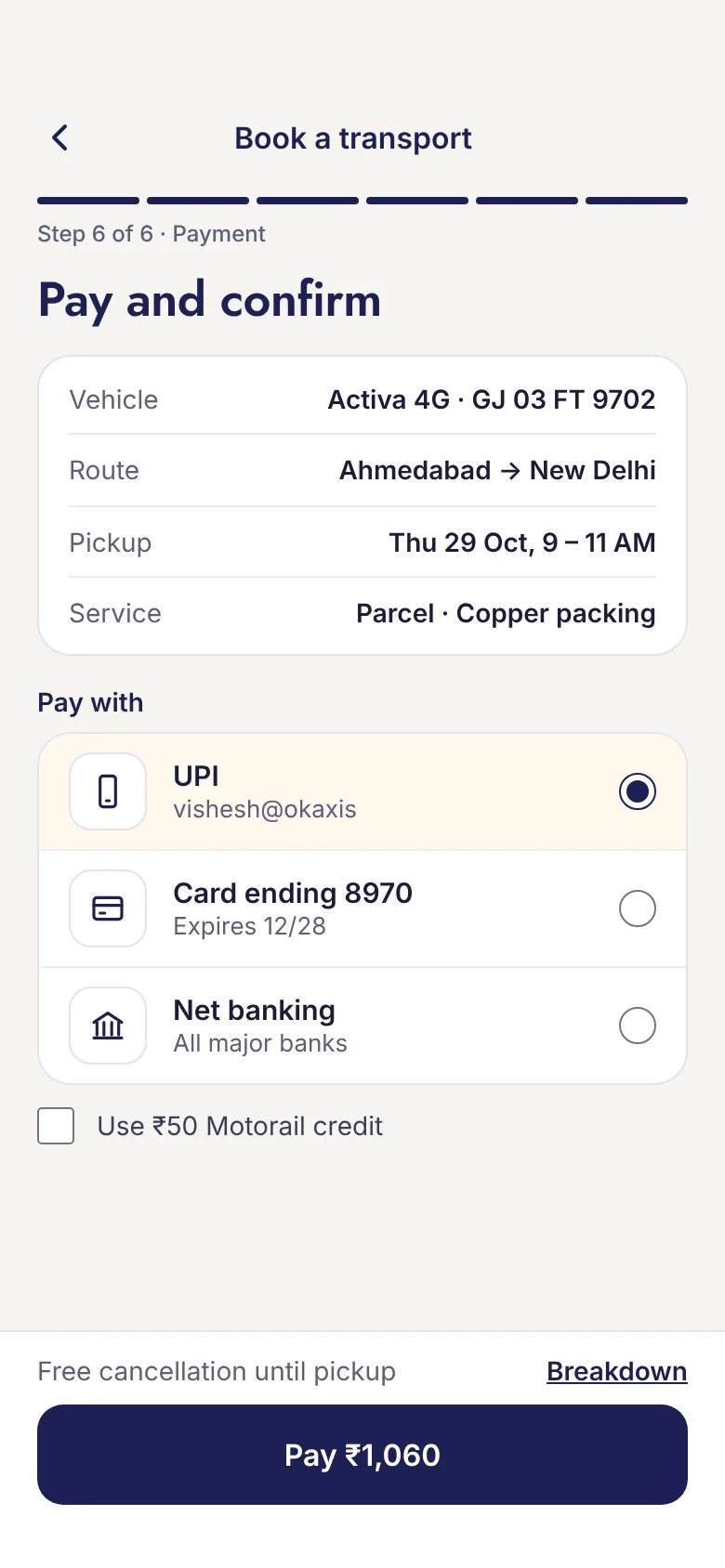
6. Payment
UPI, card or net banking, with free cancellation until pickup.
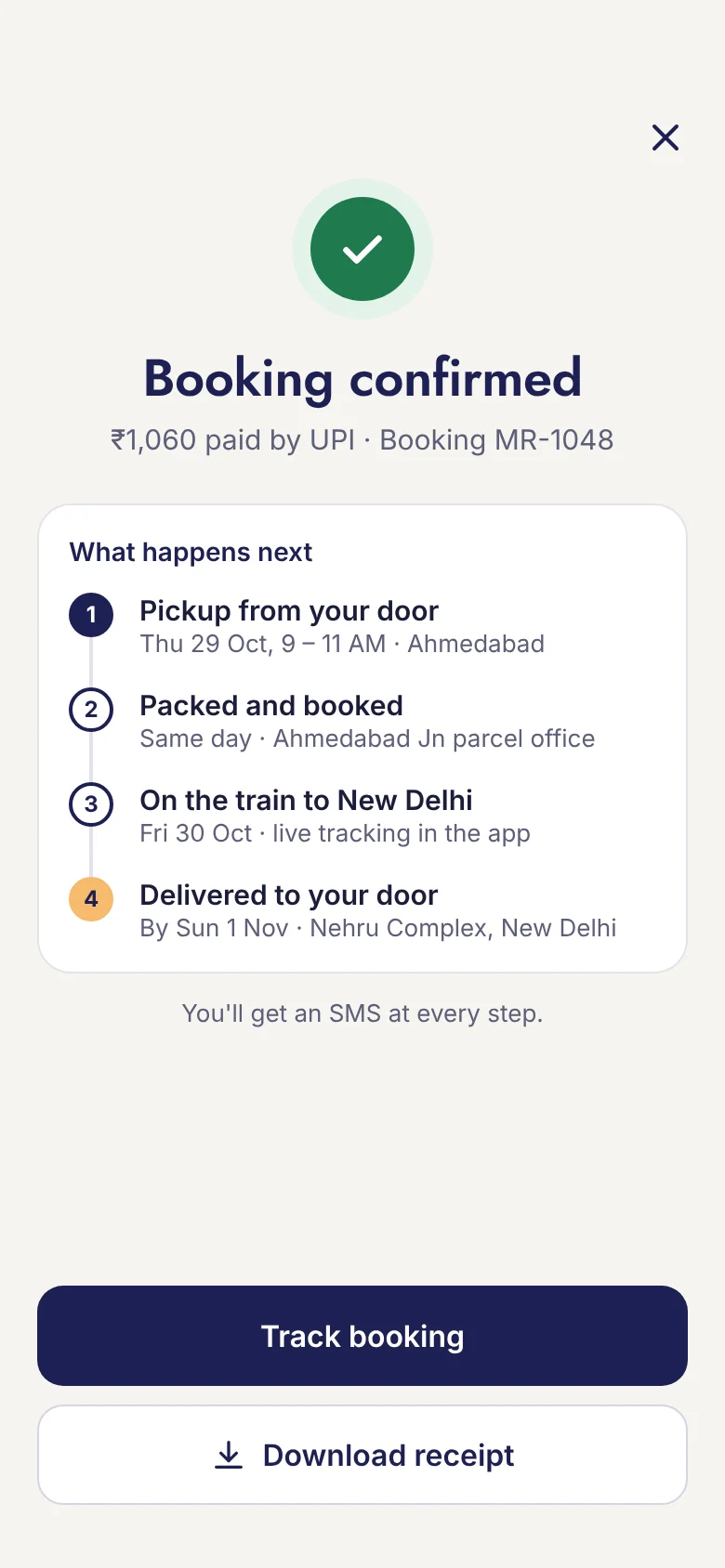
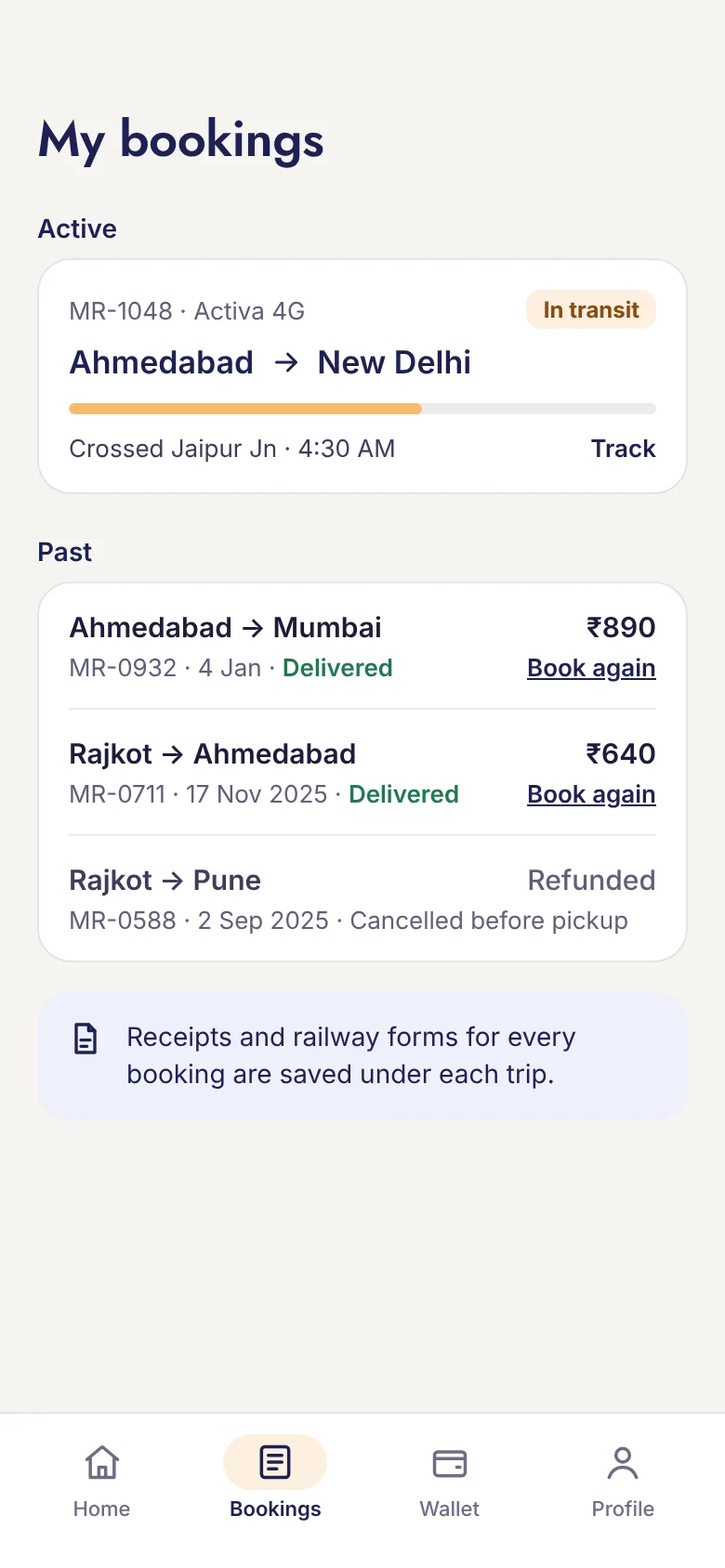
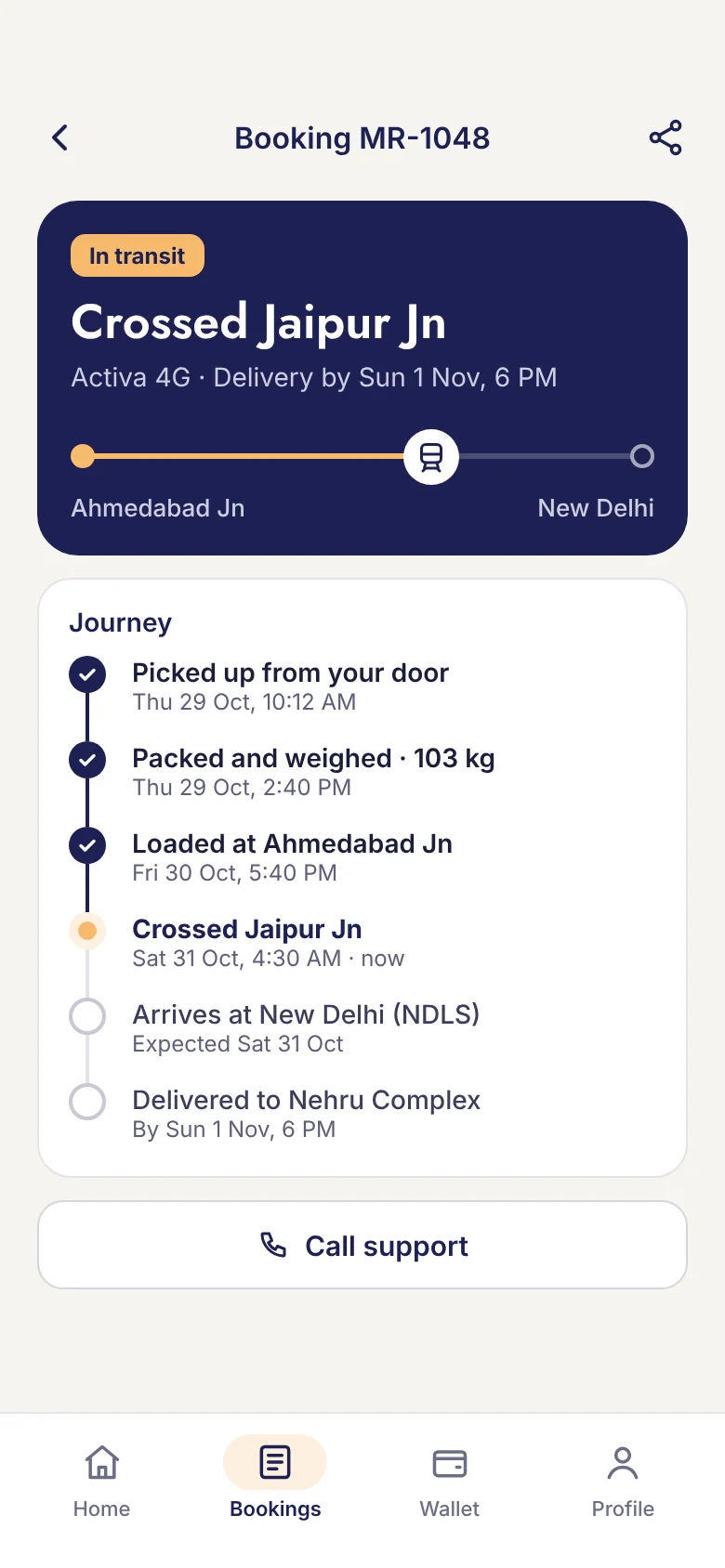
After you pay, the stations become the progress bar.
Confirmation spells out the next four steps with dates. Tracking follows the bike from your door to Ahmedabad Junction, past Jaipur, into New Delhi, with an SMS at every stop and support one tap away.
The system
Four colours, two typefaces, one way to say “selected”.
Navy carries text and every primary action. Saffron is for progress and the one thing to notice on a screen. Selected options always get a navy outline, so packing, payment and time slots behave the same way. Headings use Jost, the geometric family that matches the wordmark; everything else is Inter.
- Navy
#1E2153
Text, actions, the logo
- Saffron
#F7BA6C
Progress and highlights
- Paper
#F6F5F1
App background
- Signal green
#1E7A4E
Done and verified
Aa
Jost
Headings and numbers
Aa
Inter
Interface text, labels and forms
Next stop
Designed and prototyped. Not yet on the rails.
Motorail is a concept. The officials we met said a third-party service is allowed, with a lease from the railway's commercial department. The next steps: test the booking flow with five riders, price a pilot on one busy route, and talk to two-wheeler dealers who move bikes between cities every week.